
Artemis: From the original goddess to the joyful astronauts
We needed this. Their awe, their love, their humanity.

Her father was quite famous, a legendary leader with a nasty temper and a fondness for revenge. Her mother was gentle and kind, but fiercely protective of her children. Her twin brother was a handsome lothario who loved music and archery.
She was a bit of a crunchy granola type minus the pacifism. She liked hanging out in the woods, and although she admired both wild and domestic animals, she also was quite the hunter: Her weapon of choice was a bow and arrow. She had a soft spot for deer.
Despite her striking beauty, she never married. In fact, she became a symbol of feminine independence and empowerment. Some considered her a goddess.
And she was! I’m talking, of course, about Artemis, one of the most widely venerated deities in Greek mythology, and the goddess after whom the current NASA space program is named (more on the sheer joy of that flight below). She’s the daughter of Zeus and Leto, and her twin brother is Apollo — and yes, that’s who NASA named their first moon space program after.
The agency actually should have named that after Artemis: She is associated with the Moon, whereas her brother is identified with the Sun. Plus when they were born, she arrived first, so fully formed that she helped her mother deliver Apollo.
(Many Greek gods and goddesses were born in bizarre ways. Athena, for example, sprung out of Zeus’ forehead, fully grown and wearing armor. Zeus’ father Cronus deposed his father, Uranus, by castrating him, then threw his genitals into the sea where they mixed with sea foam to create Aphrodite. Those Greeks — and Romans — certainly didn’t suffer from a lack of imagination.)
Artemis is a significant figure in Greek mythology because she was one of the few women who wasn’t portrayed as either incredibly promiscuous or incredibly disloyal.
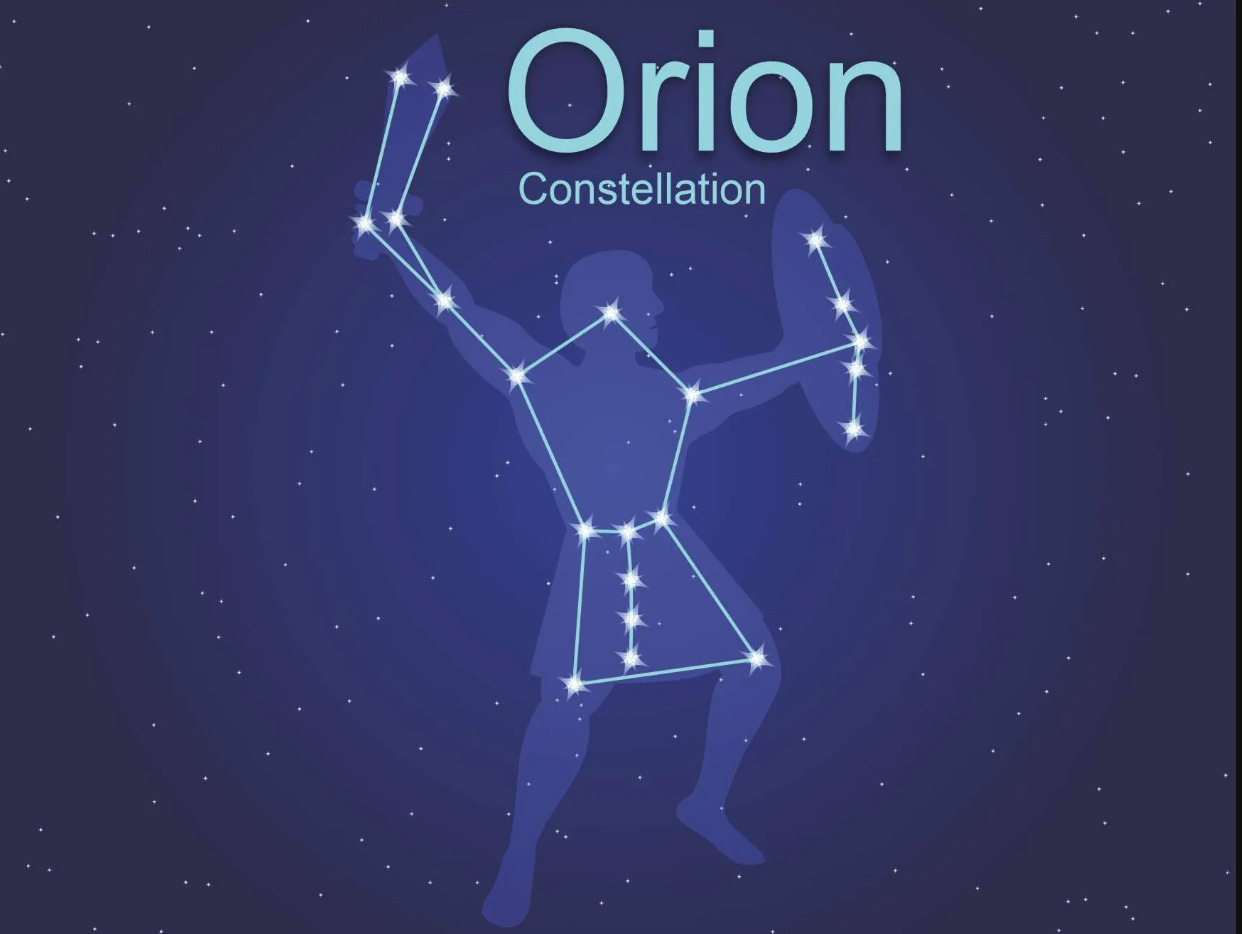
Note that the Artemis II astronauts are flying on the Orion spacecraft. Orion was Artemis’ hunting companion, and there are various versions of the story of his death. Here’s the most romantic: Artemis fell in love with Orion, the only time she ever loved, and intended to marry him. Her jealous brother Apollo tried to dissuade her, and when he couldn’t, he tricked her into accidentally shooting Orion at a great distance with an arrow, killing him. When his body washed ashore, she was devastated.
Regardless of which version you embrace, the ending is the same: Artemis preserves Orion’s memory by placing him in the sky to form one of our most prominent constellations, easily spotted by the three diagonal stars that form his belt.
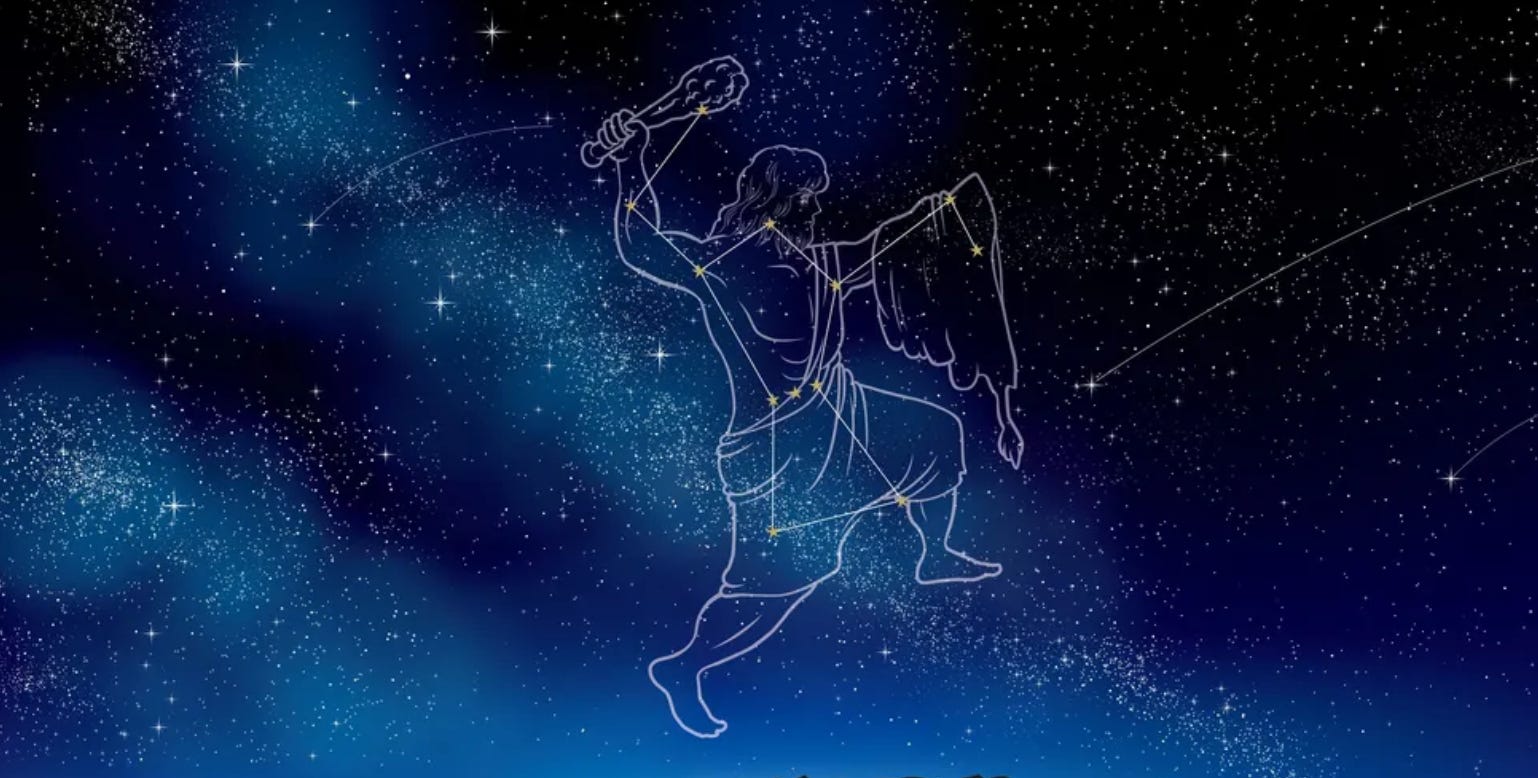
manpuku7 via Getty Images and Space.com
Here’s another version by Teide by Night:
As for our modern-day heroes who are on their way back to Earth after having circled the Moon, this has been one of the most enjoyable and uplifting space missions I can remember.
Their enthusiasm has been a delight. They have been full of wonder, marveling at the moon as they drew closer; enthralled by its terrain, stunned that they were so close.
Commander Reid Wiseman could hardly contain himself:
You know, I’m not one for hyperbole, but it’s the only thing I could come up with. Just seeing Tycho. There’s mountains to the north. You can see Copernicus, Reiner Gamma. It’s just everything from the training, but in three dimensions and absolutely unbelievable. This is incredible.
At Mission Control in Houston, Jacki Mahaffey, the Artemis II chief training officer, chuckled.
Copy, moon joy.
Moon joy. It’s a glee that has spread globally, inspiring adults and children alike.
The astronauts’ sense of wonder has been conveyed in a myriad of ways, both big and small. Take this Instagram post by Mission Specialist Christina Koch, the first woman to leave Earth’s orbit, as she looked back at our Blue Planet:
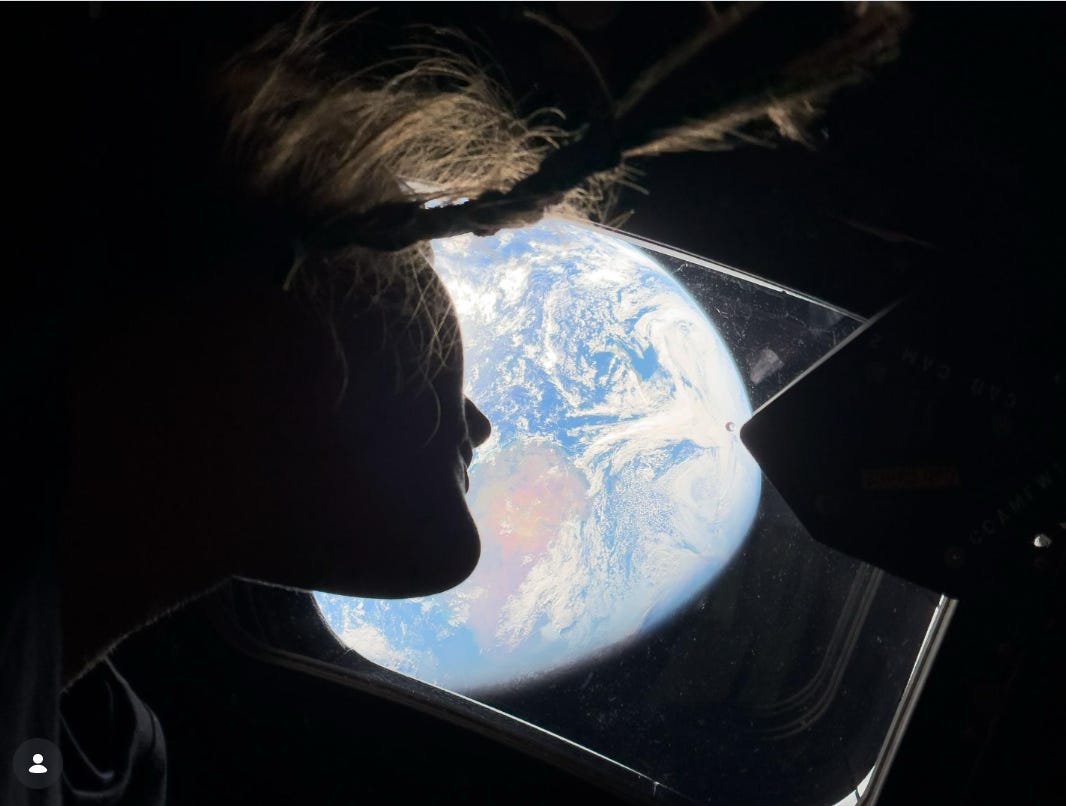
First braids to leave Earth orbit. (unconfirmed) — astro_christina
As Artemis II prepared to travel to the dark side of the moon, and lose communication with Earth for about 40 minutes, Pilot Victor Glover reflected on their journey:
As we get close to the nearest point to the moon and farthest point from Earth, as we continue to unlock the mysteries of the cosmos, I would like to remind you of one of the most important mysteries there on Earth, and that’s love. Christ said, in response to what was the greatest commandment, that it was to love God with all that you are. And he, also being a great teacher, said the second is equal to it, and that is to love your neighbor as yourself. And, so, as we prepare to go out of radio communication, we’re still open to feel your love from Earth, and to all of you down there on Earth and around Earth, we love you from the moon. We will see you on the other side.
We love you from the moon. Love has been missing from our daily discourse. Perhaps because hope has faded, replaced by a quiet despair that we’re losing our humanity.
But these astronauts were determined to show love in more than one way. After they swung around the moon’s back side and re-established communication with Earth, they had something important to do before they left Moon’s orbit.
Mission Specialist Jeremy Hansen, a Canadian Space Agency astronaut, called Mission Control with a special request: That a bright crater on the Moon often visible from Earth be named in honor of Wiseman’s wife, who died of cancer in 2020 at the age of 46.
A number of years ago we started this journey in our close-knit astronaut family, and we lost a loved one. And there’s a feature in a really neat place on the moon. It is on the near side / far side boundary …. And so we lost a loved one, her name was Carroll. The spouse of Reid. The mother of Katie and Ellie. It’s a bright spot on the moon, and we would like to call that Carroll.
As he spoke, Wiseman grew emotional. Koch wiped away tears. And then they all embraced.
We needed this. All of this. The thrill, the joy, the love, the humanity. The bravery of those four astronauts to travel a quarter of a million miles from home. The expertise in electrical engineering, space science instrument development, flight test engineering, deep-space navigation, robotic systems, and other scientific research. The tenderness with which they have treated each other.
They have shown us that even during what feels like the worst of times, we can still experience the best of times.
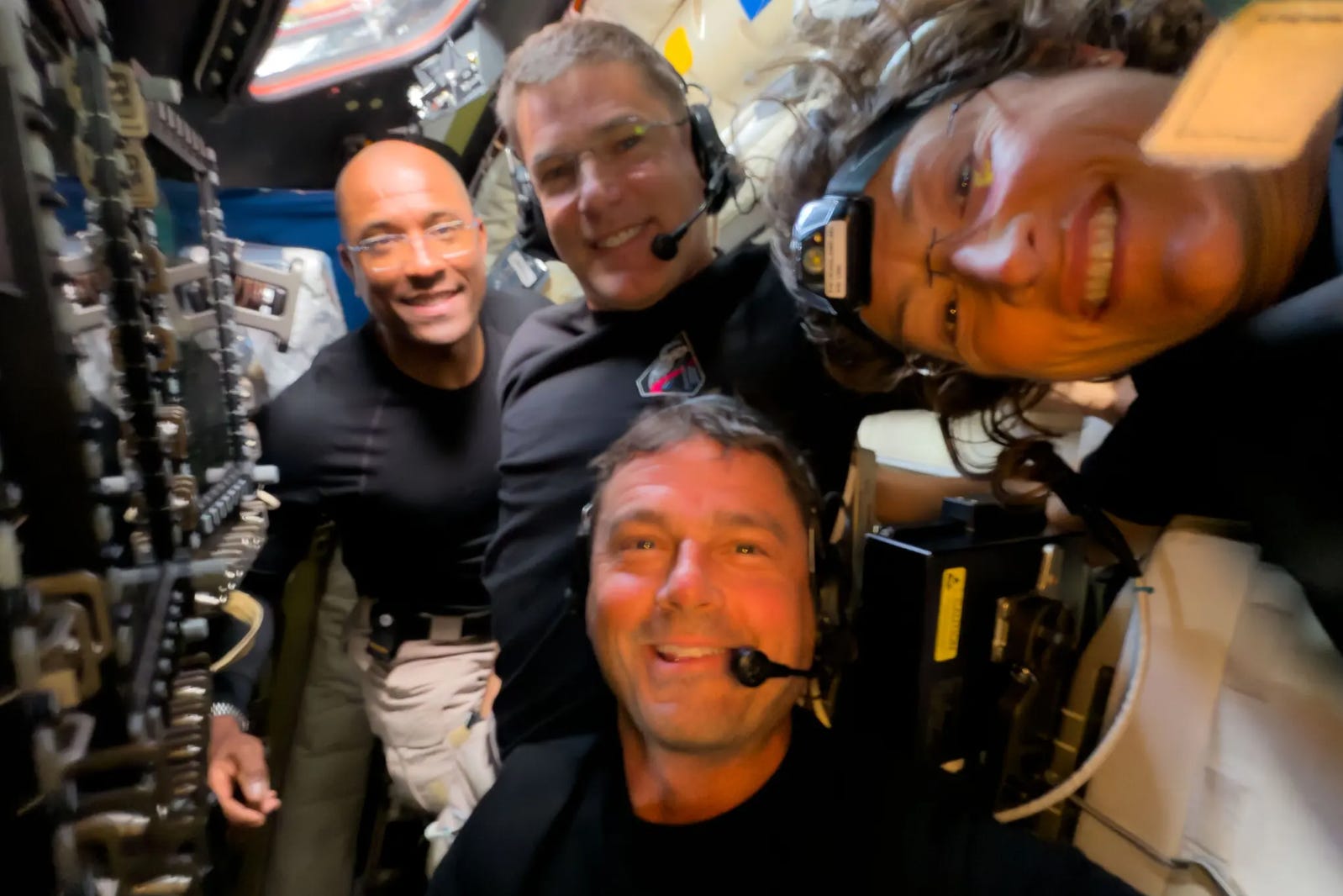
Clockwise from bottom: Reid Wiseman, Victor Glover, Jeremy Hansen, and Christina Koch. NASA
These marvelous humans are scheduled to splash down in the Pacific off the coast of San Diego at 8:07 p.m. ET Friday. Godspeed.
These intelligent, kind , hard working and forward looking humans were and are the antidote we needed to show us the heights ( literal and figurative) that we humans can strive for in this time of so much negativity.
Thanks Teresa .
Also for a little lesson in Greek mythology.
One of the best things I have read in a long time. Thank you Artemis astronauts, and thank you Teresa! Beautiful!❤️